disconnection & connection

(For the first time in my life, I’m writing a post that I feel compelled to begin with a trigger warning: this essay includes descriptions of violence and death. If you’re not currently in a space where it feels safe to contemplate such concepts, please skip this one.)
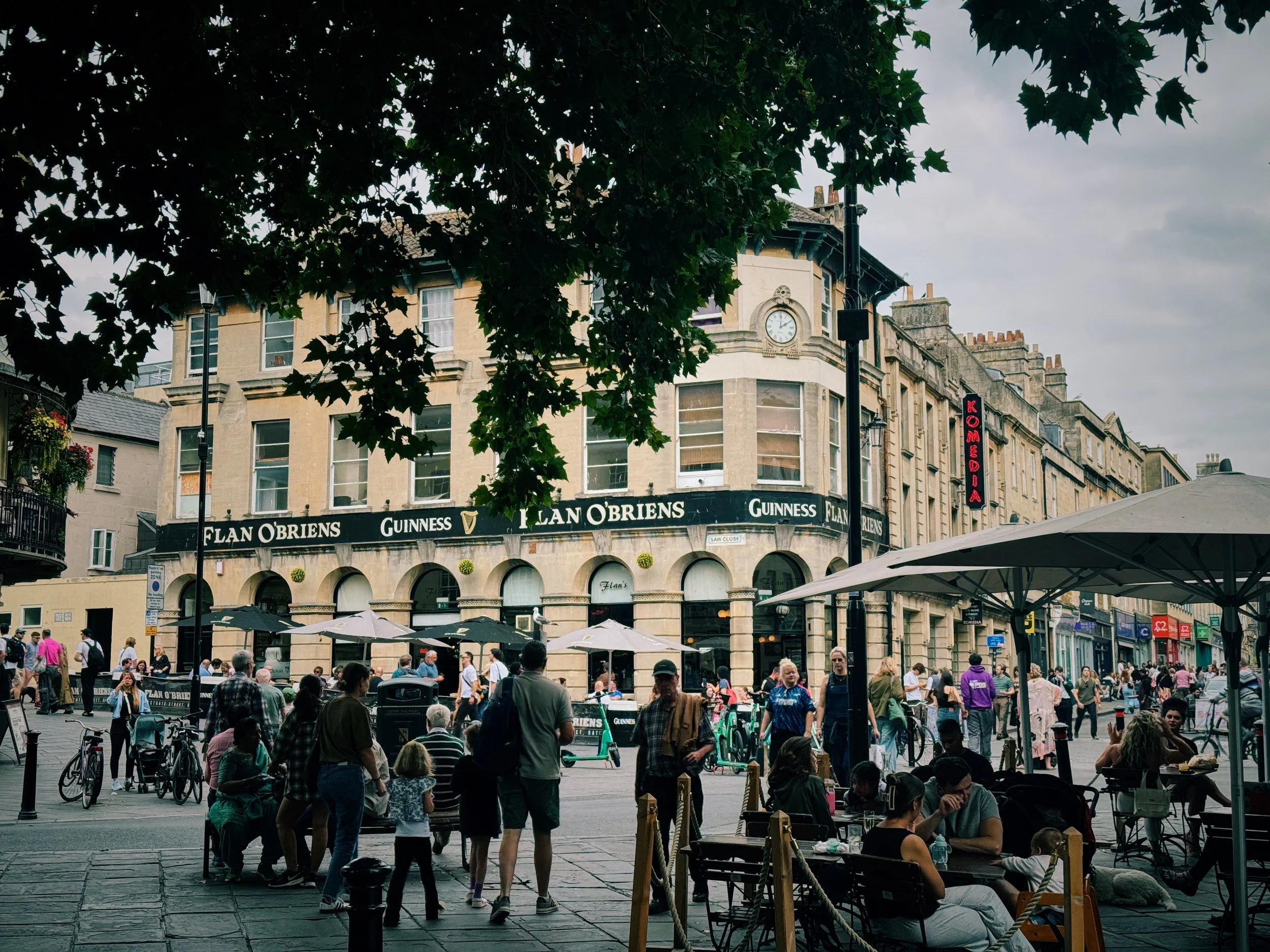
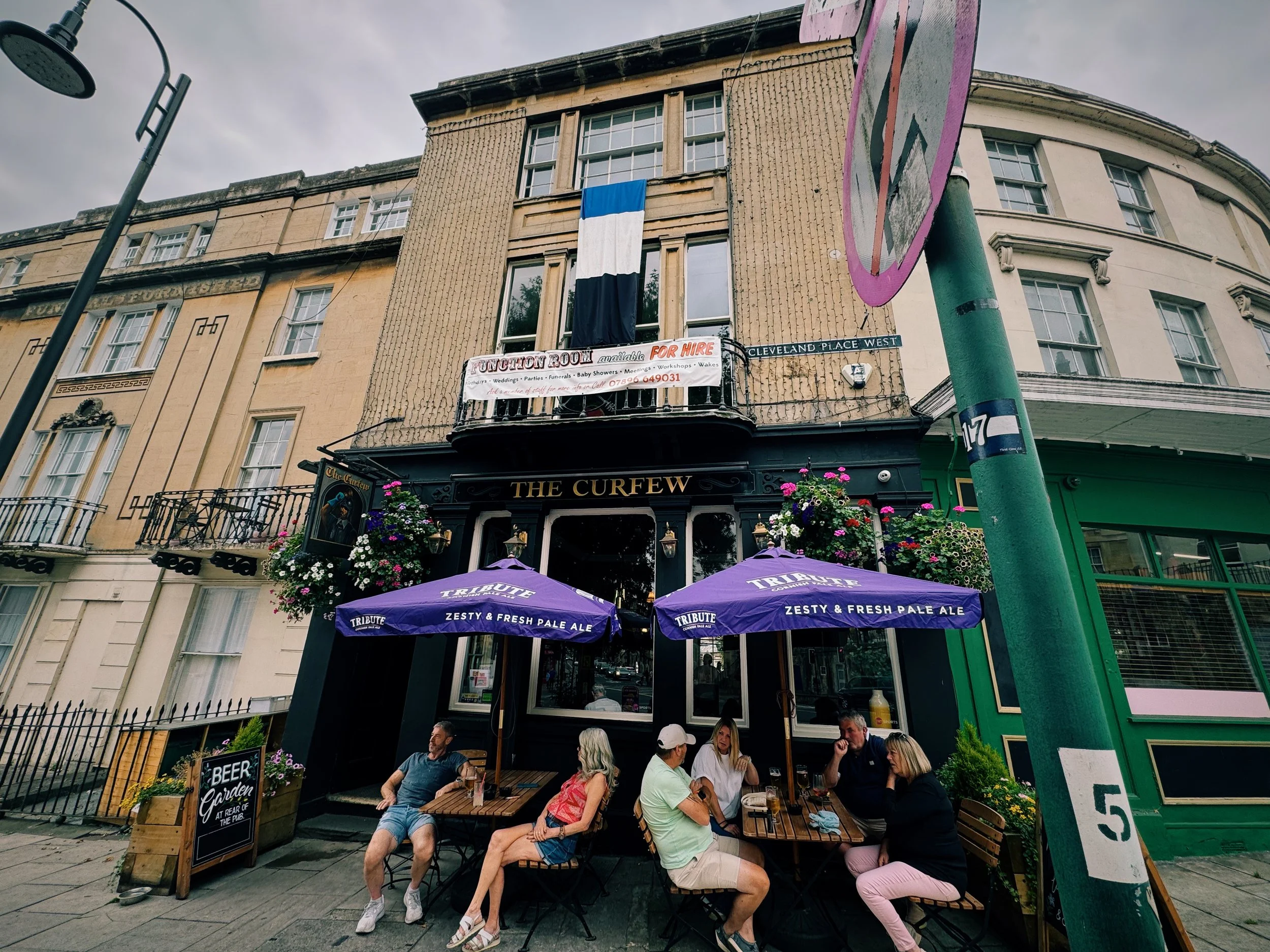
Last week, Marcus and I were having an early dinner “down the pub,” when a man walked in and sat at the table next to us. He was of average height, stocky, with short-cropped hair and sleeve tattoos on both arms. He paid no attention to us and instead nursed his pint of ale while staring at his phone. Marcus and I continued our inane conversation about what foods or drinks countries generally hit out of the park when it comes to their local cuisine. (For the record: England — anything related to dairy: cheeses, creams, ice cream, etc.; France — pastries, or most dishes that combine butter and garlic; America — sandwiches: hamburgers, deli, or otherwise; Netherlands — beers, although we conceded that edibles should probably warrant an honourable mention. But I digress.)

At the end of our meal, Marcus got up to go to the restroom, leaving me alone to finish my coffee. While he was gone, the man suddenly and loudly exclaimed at something on his phone. I looked up, and our eyes met.
“Sorry,” he said.
“Not a problem,” I smiled back.
Unexpectedly, he launched into the story of his life. (Later, Marcus insisted that he was drunk, although I certainly didn’t notice it — he seemed sober, if troubled, to me.) In his past, he’d had a normal, blue-collar job, but he was now just back from Ukraine: he wasn’t a soldier, but he’d been contracted by the military to fly drones. My naive ass thought he meant drones that were used to survey or map an area, but he quickly disabused me of that notion.
“Look,” he said, getting out of his seat, and coming closer to show me his phone screen. On it was a grainy black-and-white still image from a video. “That’s a person,” he said, pointing, “and that’s my drone.” To be honest, I couldn’t make out what he was talking about. And then he pressed play.
The image on the screen began to move: suddenly, there was a huge explosion, followed by the unmistakable appearance of a body collapsing. I was horrified: first, that I’d just witnessed someone’s death, and secondly, that it didn’t look real — it looked like a video game. How is it that death looks like a video game? I wondered, feeling more and more repelled at the thought.
Marcus returned.
“This man has just come back from Ukraine,” I managed to squeak out.
“Oh,” said Marcus, smiling at the man.
“Yes,” he said. “I’m home on leave, trying to figure out if I want to go back,” he said. “It’s good money, but …” across his face flashed … sadness? Regret? Self-recrimination? “It’s just too much....”
“I bet,” said Marcus.
“Anyway,” he said. “Where are you guys from?”
Marcus and I explained. (It’s always a complicated explanation.) “Oh, America! I’ve been several times! I have good friends there! I’ve never been to the Caribbean, but I’ve always wanted to visit …” He didn’t seem to want to let us go — he told us about all the states he’s visited, and his intent to go visit friends who still live there. Eventually, Marcus and I made our excuses to leave.
“It was so nice meeting you!” he said, vigorously shaking our hands in turn. “I hope you have a wonderful evening!” And he strode out of the pub ahead of us, crossing the street and making his way into … another pub.
As you can imagine, I haven’t been able to stop thinking about this exchange: the way that the footage from the drone felt disconnected from what was actually happening, but then again, it really, really, didn’t. The way I struggled with what this man did for a living, but I also felt compassion for how he was suffering: it was clearly adversely affecting his mental health. The way this man seemed starved for connection, and the way I hoped the small amount of connection Marcus and I were able to give felt healing, in some way.
And the way that I’m still struggling to process everything I witnessed that evening.
As it happens, a day earlier, a friend had quoted Brené Brown to me: “People are hard to hate up close,” she said. That phrase has been rattling around my brain a lot since that pub dinner. Screens — the ones we all hold in the palms of our hands, but also as a part of our jobs — might give us glimpses into other worlds, or even educate us, but I’m beginning to believe that they do so more and more to the detriment of our connections and of our mental health. Screens often erode our ability to remember that we are all interconnected, making our own individual, challenging ways on this tiny rock, hurtling through space.
I know this is pretty rich coming from me, considering that I’m communicating with you through a screen right now. But since I have your attention, my wish is this: at some point this week, may we all put down our screens. May we spend some time getting close to someone: over coffee, maybe, or even “down the pub.”
May we be present with each other in a way that feels healing, in some way.