silent power
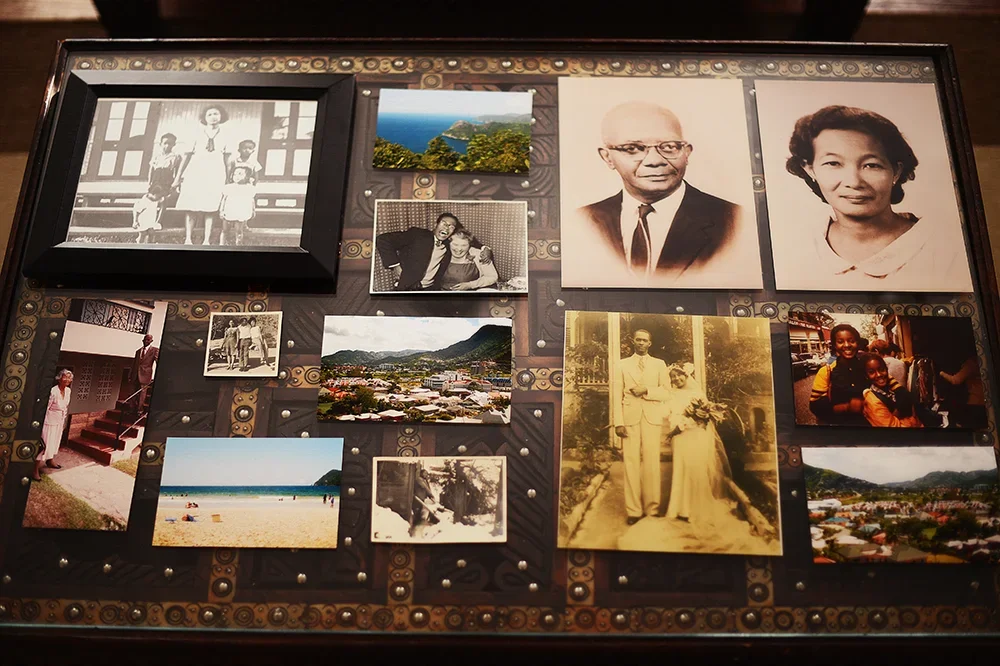
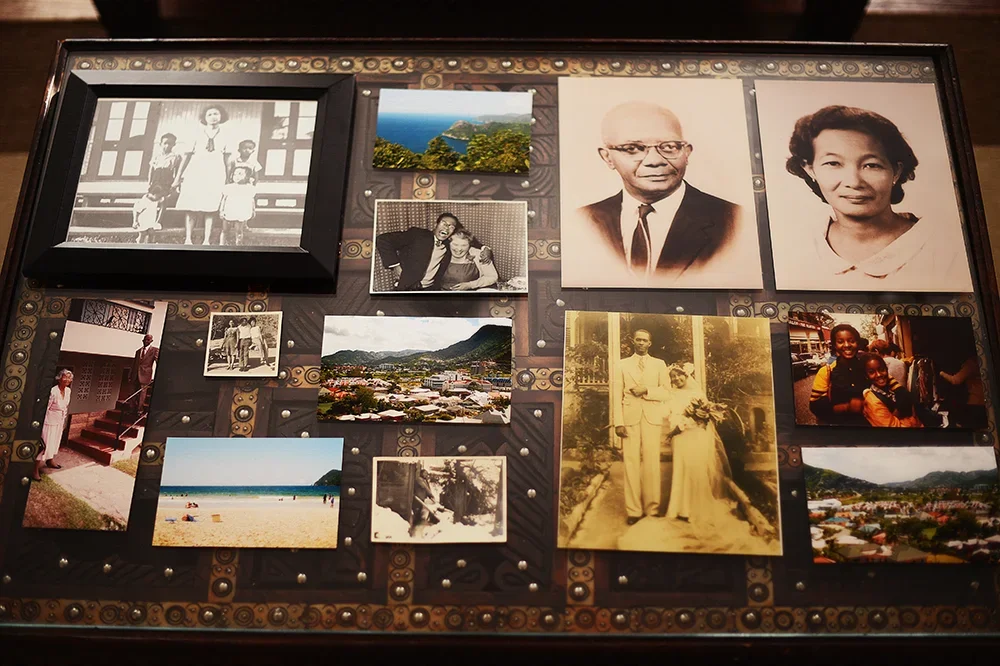
My paternal grandfather (portrait, upper right) and my maternal grandmother (the bride in the image below his): the poets.
My father’s brother —
the one who lives on a small island in a chilly ocean
thousands of miles from our homeland —
was going through his late father’s papers
(receipts, accounts, letters,
and artifacts of an early twentieth-century colony)
when he came across a poem
scrawled in my grandad’s steady hand.
The last line read:
The mightiest force in the world is the silent power of love.
I mentioned the poem to my mother,
and her eyes danced with fond memories of her father-in-law,
until suddenly, they didn’t.
”Somewhere, I have a journal of poems your grandmother wrote,”
she said, surprised at the recollection.
”I wonder where it is?”
she asked,
as if I knew.
I couldn’t answer.
I was too busy marveling
that two grandparents,
on either side of my family,
wrote poetry
in their personal papers,
quietly.
Privately.
Did everyone write poetry
in our tropical, colonial home
in the early twentieth century?
Was it common
to write in verse
to make sense
of an ever-changing, confounding world?
And if so, did they write of mighty forces of love
with conviction,
or hope?
Then I wondered,
if my grandparents were alive today,
what poetry might they have written
of superpowers led by the merciless,
of gun violence and hate crimes,
of catastrophic wildfires and historic floods,
of anguished parents clutching emaciated children,
their bodies illuminated by the red glare
of missiles
bearing the autographs
of politicians?
How might they have made sense
of events
that reduce rational thought
to sentence fragments
and
single
words?